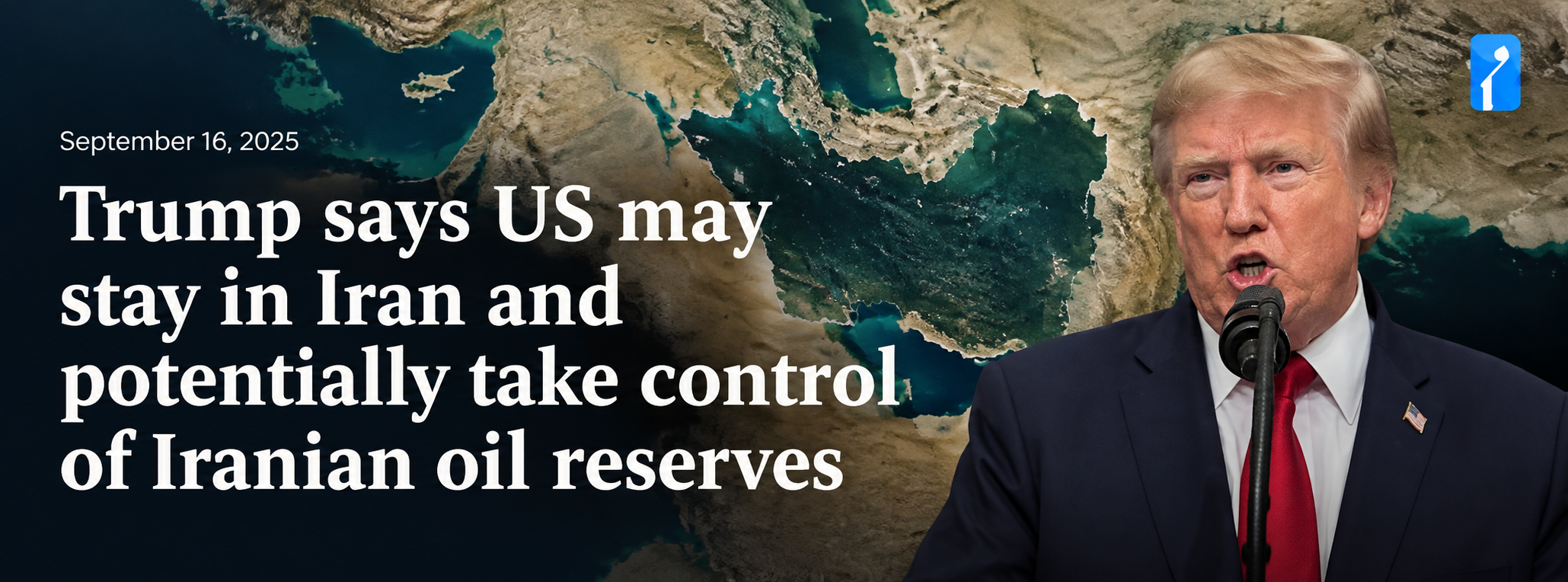
President Trump suggested Monday that the United States could remain in Iran and take control of its oil reserves once the ongoing war concludes, drawing a direct comparison to the administration's arrangement with Venezuela following the capture of Nicolas Maduro.
A Striking Comparison
"We'll ultimately get out, unless we decide to stay and keep the oil, like Venezuela," Trump told reporters, referencing an earlier deal in which Venezuela's interim authorities agreed to hand over 30 to 50 million barrels of sanctioned oil to the US following Maduro's capture. The remark marks one of Trump's most explicit suggestions yet that Washington could seek a long-term economic foothold in Iran's oil sector rather than a clean military withdrawal.
Predicting An End 'Right After The Midterms'
Trump again said the war in Iran would end "right after the midterms" on November 3, though he suggested a resolution could potentially come sooner, and reiterated his belief that gasoline prices would fall once the conflict concludes. His comments came as diesel prices topped $6 a gallon for the first time, a record the administration has partly attributed to disruptions tied to the war in Ukraine rather than the Iran conflict.
Mixed Signals From His Own Team
Energy Secretary Chris Wright has been notably more cautious in recent television appearances, telling CNN he did not "want to have an opinion" on whether gas prices would keep rising, though he said a decline was more likely than a continued increase. Wright has also downplayed the odds of a nuclear deal ending the conflict, despite the US and Iran having reached an interim agreement back in June intended to eventually de-escalate tensions.
Context From The Strait
Trump's comments came the same weekend an Iranian commercial vessel was struck by an unidentified projectile in the Strait of Hormuz, and as Iran prepared for a planned meeting with Gulf states in Oman to discuss safe shipping passage through the waterway. With oil markets already volatile from months of fighting, Trump's remarks about a potential long-term US presence in Iran are likely to add a new layer of uncertainty to how the conflict's endgame is being read by global energy markets.