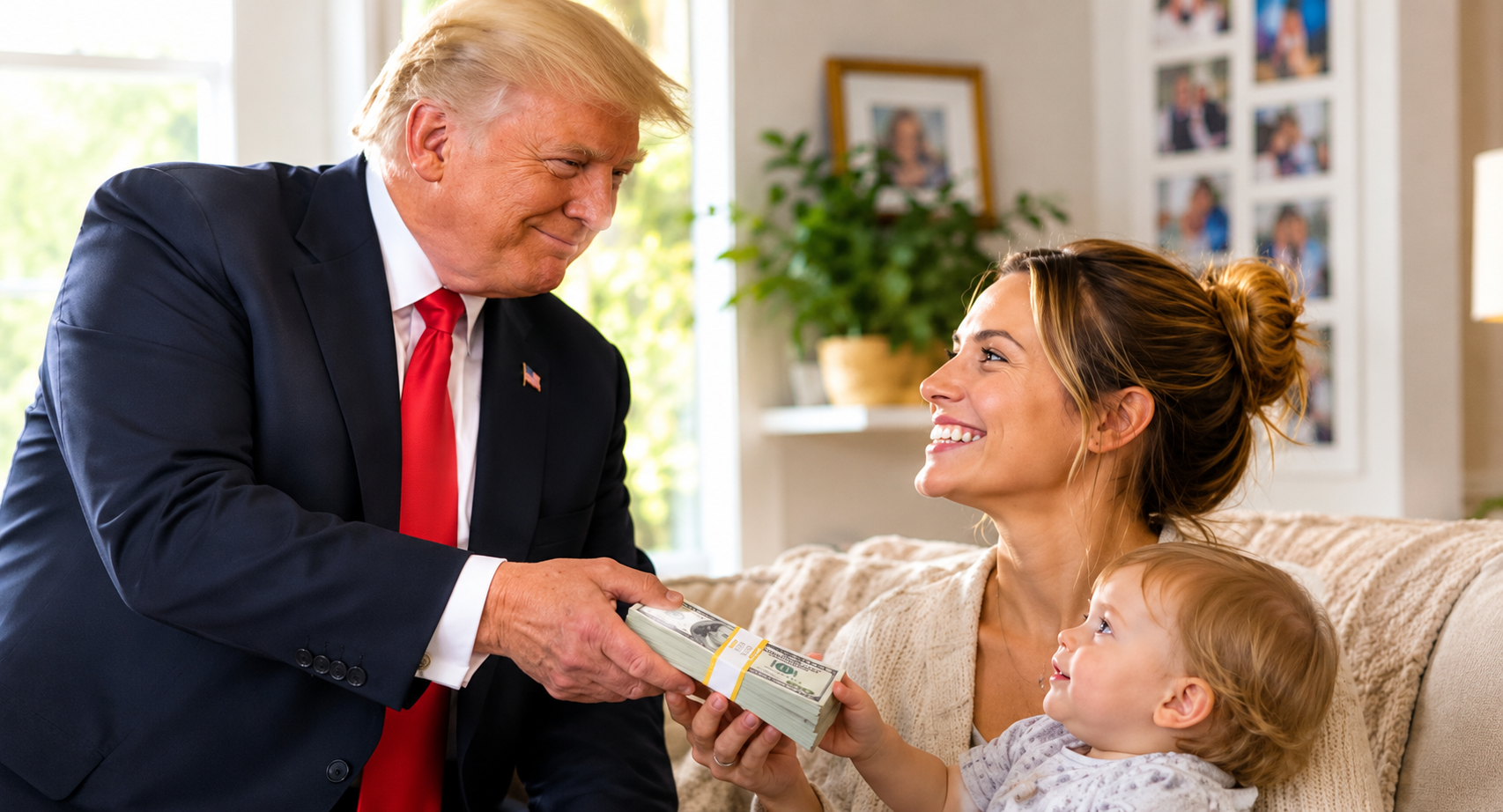
The Trump administration is drafting a proposal that would allow married couples with a stay-at-home parent to receive direct payments through a federal child care fund, in what would become the first federal grant program specifically compensating parents for staying home to raise their children.
How The Proposal Would Work
Under the draft rule, eligible families could receive around $9,000 per child annually, roughly $750 a month per child, from the Child Care and Development Fund, a roughly $12 billion Department of Health and Human Services program created in the 1990s to help low- and moderate-income parents afford child care. Funds currently go mostly to child care providers, but the proposal would let stay-at-home parents receive the payments directly from the government instead.
Who Would Qualify
The benefit would apply only to married couples in which one parent works and the other stays home, meaning unmarried couples and single, unemployed parents would not be eligible under the current draft. The change would not require congressional approval, since it relies on existing regulatory authority over the fund, and could take effect as early as 2027 following a public comment period if the White House moves forward.
Support And Criticism
Supporters, including Heritage Foundation Vice President Roger Severino, argue stay-at-home parents deserve support comparable to families that use subsidized child care, framing the plan as correcting an imbalance in how federal dollars are distributed. Critics, including Amy Matsui of the National Women's Law Center, warned that expanding eligibility without new funding could intensify competition for a program that already had more than 400,000 children on waiting lists at the end of last year.
A Bigger Push On Family Policy
The proposal, reportedly championed within the administration by Vice President JD Vance, is being described as one of the most significant efforts yet by the White House to use federal funds to promote a traditional model of family life. More than 80% of stay-at-home parents nationwide are mothers, according to Pew Research Center data, meaning the policy's impact would likely be felt disproportionately by women if it is finalized.