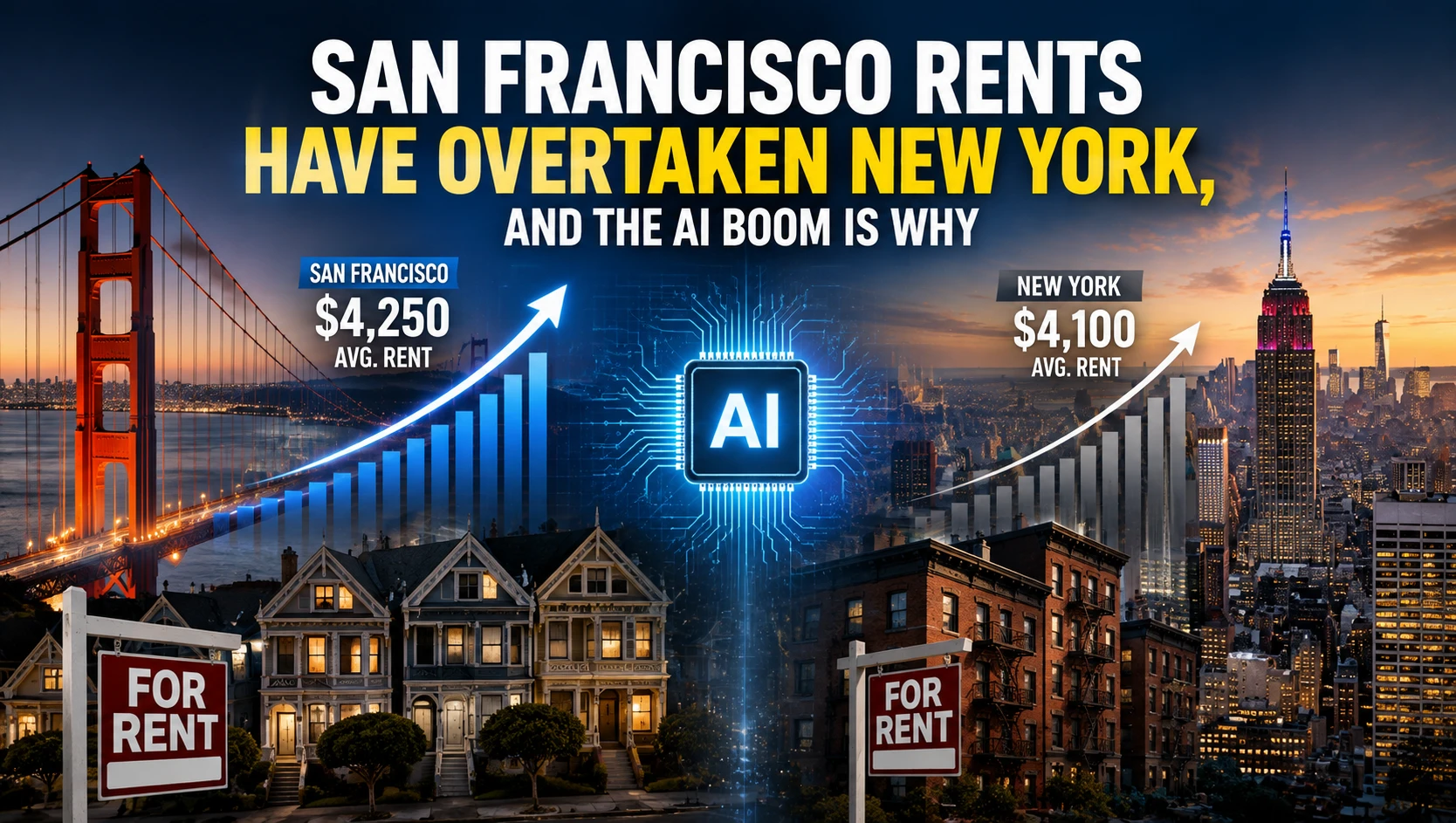
For years, San Francisco lived in New York City's shadow when it came to bragging rights for the most punishing rental market in the country. That has now changed. According to data from real estate firm CoStar, the average asking rent in San Francisco has climbed roughly 18 percent in under two years, pushing the city past New York to claim the title of most expensive major rental market in the United States.
The driver behind the surge isn't a mystery. It's the same force reshaping large parts of the American economy right now: artificial intelligence. Companies like OpenAI and Anthropic have been expanding rapidly in the Bay Area, hiring aggressively and paying salaries that increasingly resemble Wall Street compensation packages rather than typical tech-industry pay.
Where The Money Is Landing
The rent increases haven't been spread evenly across the city. Neighborhoods closest to major AI offices, particularly SoMa and Mission Bay near OpenAI's headquarters, have seen rents climb well above 10 percent year over year, while more residential parts of the city have moved far less. Nearby Silicon Valley cities with heavy concentrations of tech offices, including Mountain View, Palo Alto and Sunnyvale, are experiencing similarly steep increases.
Analysts have compared the pattern to what New York went through in the 2000s as Wall Street rebuilt itself around hedge funds, where new wealth concentrated tightly around specific zip codes before pulling up prices in the surrounding area. Unlike the last major tech boom, though, this new wave of money isn't spreading out into the suburbs. It's staying put in the city itself, in part because AI companies have been pushing for more in-office and hybrid work rather than fully remote arrangements.
Supply Hasn't Kept Up
On the other side of the equation is a supply problem that has been building for years. San Francisco's apartment vacancy rate has fallen to roughly 3 percent in the most sought-after neighborhoods, down from around 13 percent in 2020, according to real estate tracking firms. New housing construction has slowed to a crawl in the city, meaning even a modest increase in demand from well-paid new residents translates quickly into sharply higher prices.
One senior researcher at CoStar likened the current rental market to a pressure cooker heating up fast, a description that tracks with reports of prospective tenants offering above asking rent, paying several months in advance, and in some cases submitting personal biographies to landlords in an effort to stand out in a crowded field of applicants.
Even Six-Figure Salaries Aren't Enough
Perhaps the most striking part of the story is who's being squeezed. It isn't just entry-level workers or people outside the tech industry struggling to keep up. Reports have highlighted tech employees earning around $200,000 a year who say they are still being priced out of desirable neighborhoods, with some choosing to relocate to outlying areas like Lake Tahoe rather than continue competing for housing in the city.
Some AI startups have responded by offering their own workarounds. A handful of companies now provide monthly rent stipends to employees who choose to live within walking distance of the office, arguing that shorter commutes translate into happier, more productive teams. It's a small-scale fix for a much larger structural problem, but it illustrates just how central housing costs have become to hiring conversations in the AI industry.
A Familiar Story With A New Name
San Francisco has been one of the most expensive cities in America for well over a decade, so the underlying dynamics here aren't entirely new. What's changed is the scale and speed of the latest wave, driven almost entirely by a single industry pouring enormous amounts of capital and talent into a relatively small geographic footprint. With several AI companies still expanding and additional public offerings expected in the sector, there's little indication the pressure on San Francisco's housing market is going to ease anytime soon.