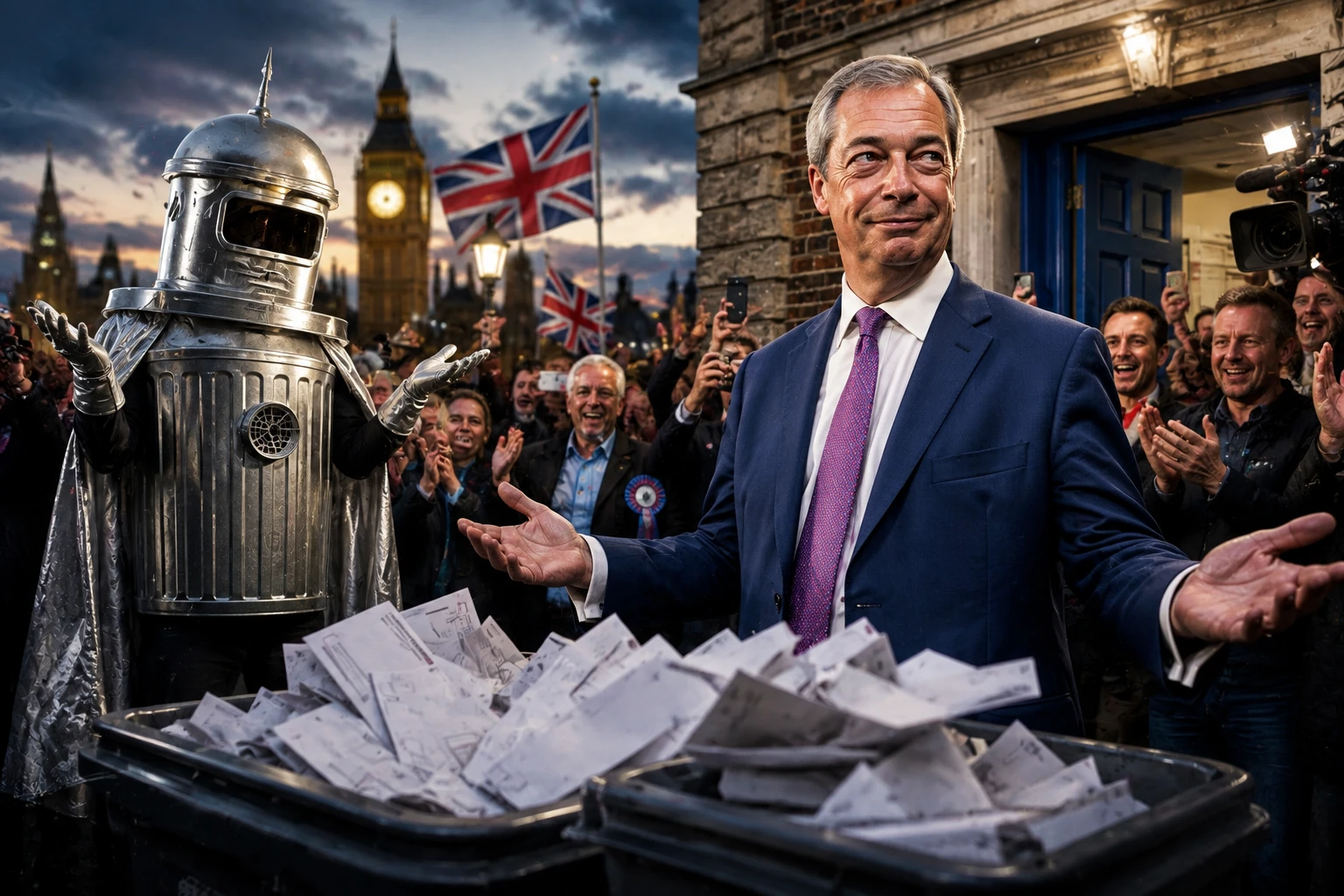
Nigel Farage is once again a Member of Parliament, just over a month after he voluntarily gave up the job. The Reform UK leader comfortably won a byelection in his Essex constituency of Clacton on Thursday, a contest he triggered himself and one that none of Britain's major political parties bothered to contest.
Farage resigned from Parliament on July 7, saying he wanted to seek a fresh mandate from voters. The move came as a parliamentary standards commissioner was investigating whether he had failed to properly declare a roughly £5 million ($6.7 million) gift he received from an overseas crypto investor before he was elected in 2024. Farage has maintained he did nothing wrong, arguing the money was a personal gift intended to help cover his security costs and that he was under no legal obligation to disclose it.
An Election With No Real Opposition
What made the byelection unusual wasn't the result so much as the field of candidates. Labour, the Conservatives, and the other established parties all declined to field candidates, dismissing the vote as a stunt engineered by Farage to draw attention away from the ongoing investigation into his finances. That left Farage facing a lineup of largely fringe and novelty candidates, more than 30 in total.
His most prominent rival ended up being Count Binface, a self-described "intergalactic space warrior" played by comedian Jon Harvey, who has built a long-running career out of running for office against sitting prime ministers and other high-profile politicians. Despite having no realistic path to winning, Binface put in a respectable showing, finishing second with roughly 9,455 votes to Farage's 22,239.
A Bigger Win Than His Original Election
Farage's vote count actually came in about 1,000 higher than what he received when he first won the seat in the 2024 general election, giving him grounds to frame the result as a personal endorsement rather than a mere formality. Turnout was higher than many expected too, with roughly 44 percent of eligible voters in the constituency casting a ballot despite the contest falling in the middle of the summer holiday season and on one of the hottest days of the year.
Speaking to supporters after the result was announced, Farage described the win as proof that voters in Clacton had rejected what he called the political establishment's attempt to sideline him. He did not attend the official overnight vote count in person, citing security advice from local police, choosing instead to celebrate with supporters at a separate event.
The Investigation Isn't Over
While the election victory secures Farage's return to the House of Commons, it doesn't make his legal troubles disappear. The parliamentary standards investigation into the undisclosed donation, which had been paused when he stepped down, resumed within hours of the result being confirmed. That means Farage returns to Parliament with the same cloud hanging over him that prompted his resignation in the first place, only now with a fresh electoral mandate to point to if the pressure builds further.
Why It Matters Beyond Clacton
Farage has long been one of the most consequential figures in modern British politics, having played a central role in the campaign for Britain to leave the European Union and, more recently, in building Reform UK into a party some pollsters now see as a genuine contender for power. His byelection strategy, essentially daring his opponents not to show up and then claiming vindication when they don't, is a tactic that could resurface again if his finances continue to draw scrutiny.
For now, though, Farage returns to Westminster with a larger vote share, a fresh talking point about establishment parties refusing to face him at the ballot box, and an unresolved investigation still working its way through Parliament's standards process. Whether the episode ends up strengthening his political standing or simply delaying a harder reckoning with the allegations against him is likely to become clearer in the months ahead.