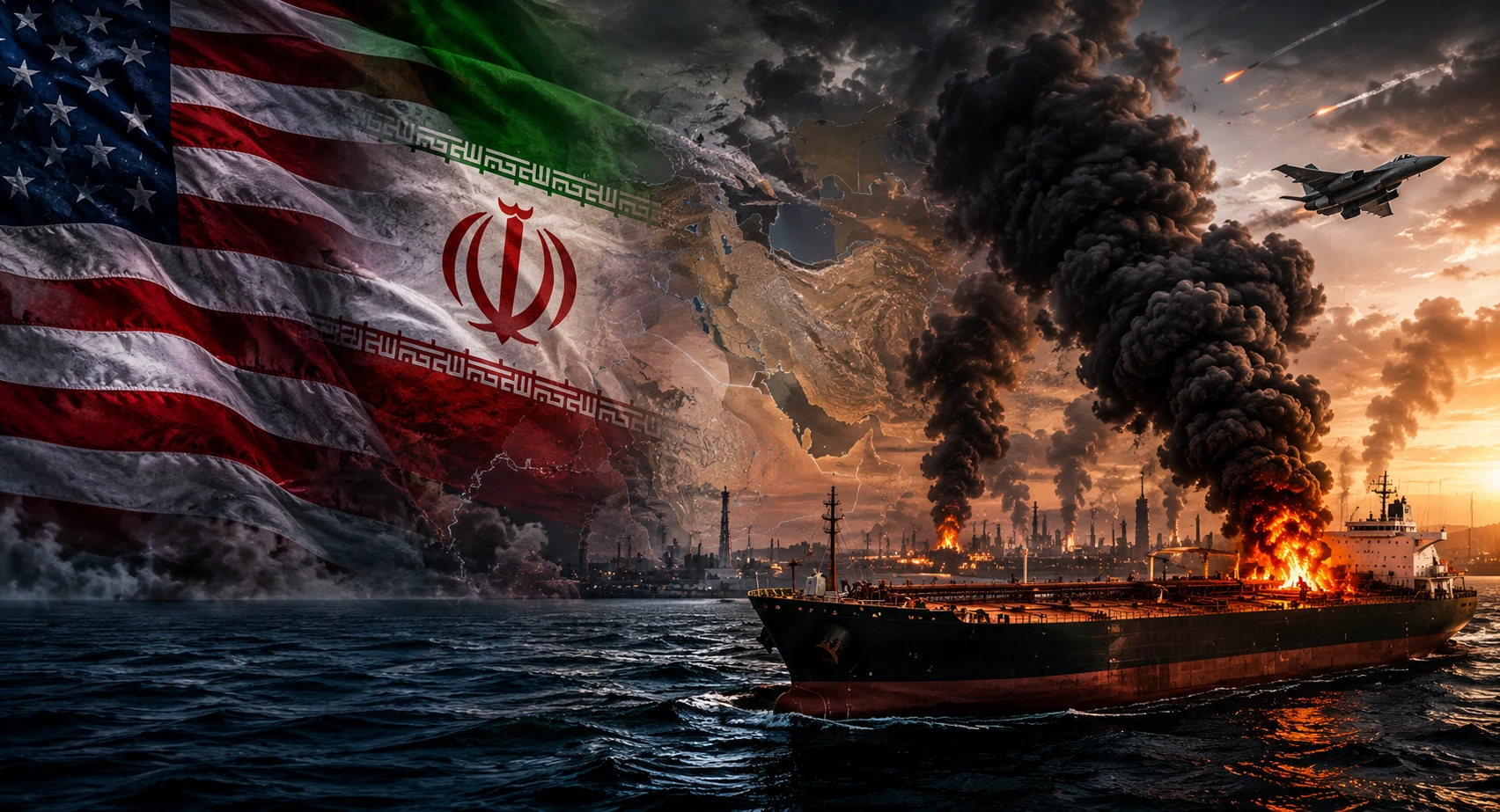
The 60-day negotiating window the United States and Iran set for themselves in June has come and gone without a lasting peace deal, and the war that has gripped the Middle East since late February shows little sign of winding down. President Donald Trump marked the deadline not with a fresh ultimatum for Tehran, but with a threat directed at one of the region's most consistent mediators: Oman.
Speaking to Fox News on Monday, Trump said the US would respond forcefully if Oman got in the way of Washington's push to fully reopen the Strait of Hormuz, using an expletive for emphasis. It was the second time this year he has aimed that kind of threat at Muscat, which has spent weeks negotiating directly with Iran over a mechanism to manage shipping through the waterway even as US-Iran talks have stalled.
A Deadline That Passed Quietly
The memorandum of understanding, signed in June at the G7 summit in France, gave the two sides up to 60 days to hammer out a permanent settlement covering sanctions relief, Iran's nuclear program and the future of the strait, through which roughly a fifth of the world's oil once flowed before the war. That window closed Monday with no announced extension and no deal on the table.
Trump insisted he was in no rush, telling reporters he has no fixed timetable and that Iranian officials are quietly negotiating through a backchannel with the Islamic Revolutionary Guard Corps, a claim the IRGC has denied. He also renewed his call for Tehran to surrender outright, while Iran's foreign ministry maintained that its talks with Oman over the strait were progressing in good faith.
Another Vessel Struck Off Oman
The diplomatic standoff played out against a fresh escalation at sea. The UK Maritime Trade Operations centre reported that a vessel transiting the strait was struck by an unidentified projectile, sustaining engine room damage and at least one crew casualty. It is the latest in a long string of attacks on commercial shipping since the conflict began, with maritime intelligence firms tracking dozens of tankers hit, boarded or forced to reverse course over the past several months.
Traffic through Hormuz has picked up only marginally since the June memorandum, with shippers still routing many vessels around Oman's coastline to avoid the narrowest, most exposed stretch of the strait. Brent crude has ticked up modestly on the renewed uncertainty, trading near $89 a barrel, still well below the peaks seen earlier in the war but a reminder of how tightly global energy markets remain tied to the outcome here.
A Region Still On Edge
The stalled talks come as the wider conflict shows signs of spreading rather than cooling. Houthi forces in Yemen say they struck a Saudi military vessel and its escorts in the Red Sea over the weekend, and Iran's army chief has publicly floated bounties for the capture or killing of American troops in the region. Trump's envoy, Jared Kushner, has meanwhile been shuttling between separate talks aimed at steadying the Gaza ceasefire, underscoring how many fronts the administration is now trying to manage at once.
For now, the strait remains the most closely watched flashpoint. Oman continues to position itself as the go-between it has been for decades, even as it finds itself, once again, in the crosshairs of a US president who has shown he is willing to threaten allies as readily as adversaries when a deal proves elusive.