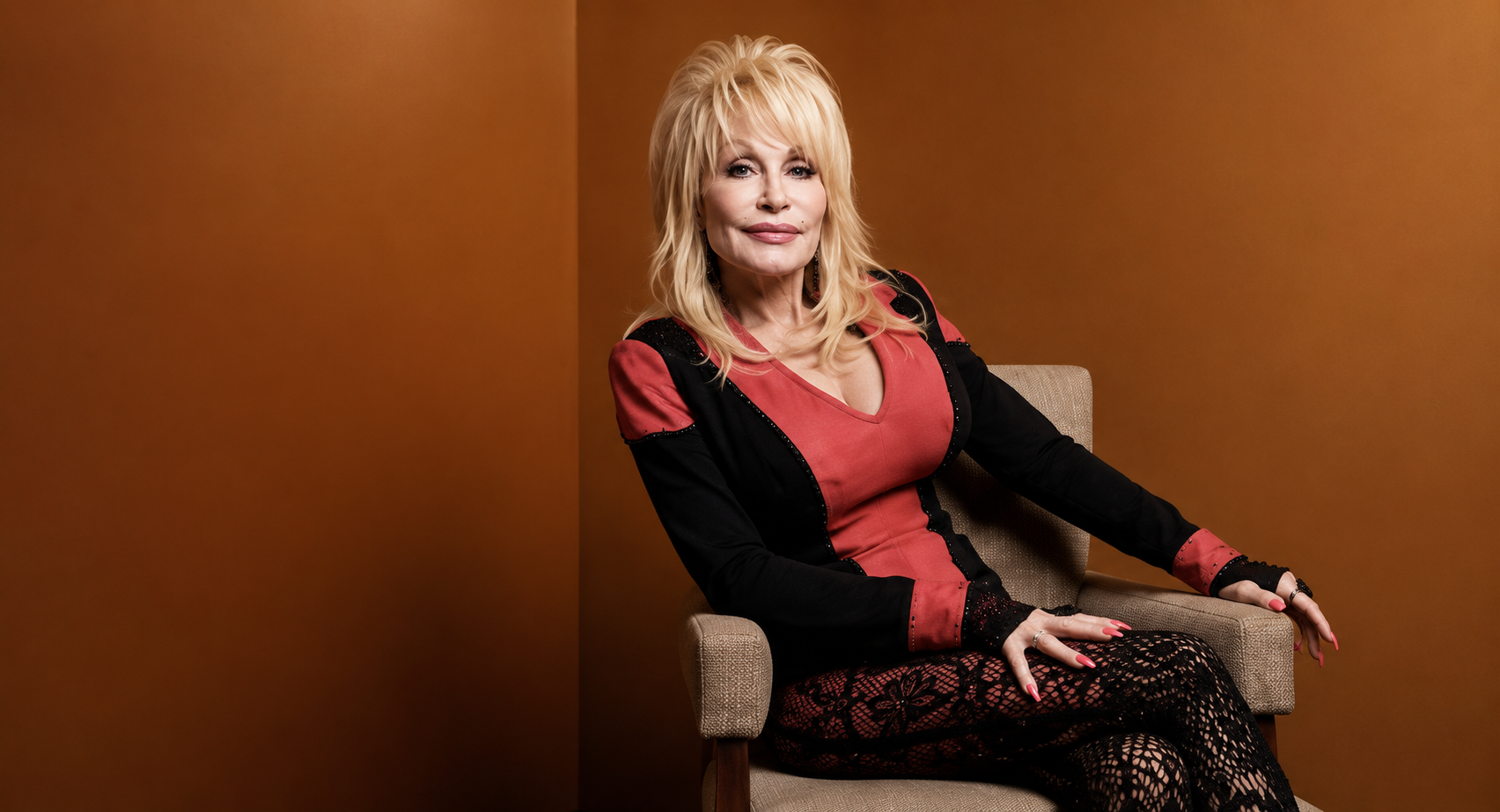
Dolly Parton, the singer-songwriter, actress and philanthropist whose music and larger-than-life warmth made her one of the most cherished figures in American entertainment for more than six decades, has died at the age of 80. Her family confirmed that she passed away on August 25, 2026, following a brief and private battle with cancer. The news was shared by her nephew, Bryan Seaver, in a video message posted to Parton's official social media accounts, and it sent a wave of grief across the music industry and far beyond it.
For generations of fans, Parton was never just a country star. She was a songwriter capable of turning heartbreak into a five-decade global anthem, a businesswoman who built an entertainment empire out of a theme park in the Great Smoky Mountains, and a philanthropist whose children's literacy program quietly became one of the largest of its kind in the world. Her death closes the final chapter on a career that helped define modern country music and, in the process, made her one of the most universally beloved celebrities on the planet.
A Career That Reshaped Country Music
Born in 1946 in the Great Smoky Mountains of Tennessee, Parton rose from a childhood of rural poverty to become one of the best-selling music artists in history, with more than 100 million records sold worldwide. Over a career spanning nearly sixty years, she wrote thousands of songs, many of which became genre-defining standards that reshaped not just country music but American popular music more broadly. Her songwriting combined plainspoken storytelling with an emotional directness that made her music resonate across generational and cultural lines, turning her into one of the rare artists embraced equally by longtime country fans, pop audiences and generations of new listeners discovering her decades-old catalog for the first time.
Industry retrospectives following her death have repeatedly pointed to her songwriting catalog as the foundation of her legacy. She was a ten-time Grammy winner and, remarkably, a 55-time nominee, a tally that places her among the most decorated songwriters in the award's history. Beyond her own recordings, her compositions were reinterpreted by artists across nearly every genre for decades, a testament to how deeply her writing embedded itself in the broader musical landscape rather than staying confined to country radio.
Beyond Music: Dollywood And A Business Empire
Parton's ambitions extended well beyond songwriting and performing. In the 1980s she partnered to transform a modest amusement park in Pigeon Forge, Tennessee into Dollywood, which grew into one of the most visited theme parks in the United States and became the economic backbone of the surrounding region. The park was more than a business venture: it functioned as a physical embodiment of Parton's connection to her Appalachian roots, and she remained closely involved with its operations and expansion for decades, including public appearances at the park as recently as its 2026 season.
That business instinct extended into television, film, hospitality and licensing, and Parton was widely credited by industry analysts as one of the shrewdest self-made entrepreneurs to come out of the entertainment industry, having built and retained ownership of her intellectual property and brand at a time when few artists, and especially few women in country music, were able to do so.
The Imagination Library And A Legacy Of Giving
Perhaps no part of Parton's legacy will be discussed as extensively in the coming days as her philanthropic work, particularly the Dolly Parton's Imagination Library, a program she founded in the 1990s that mails a free book each month to enrolled children from birth until they start school. What began as a small initiative in her home county in Tennessee grew, over three decades, into a program credited with distributing hundreds of millions of books to children across the United States, the United Kingdom, Canada, Australia and Ireland. Education researchers and literacy nonprofits have repeatedly cited the program as one of the most significant privately funded childhood literacy efforts in the world, and tributes from educators and librarians featured prominently among the outpouring of remembrance following her death.
Her giving extended into disaster relief, medical research funding and direct community support, much of which she conducted with little public fanfare relative to her fame. That combination of extraordinary generosity and a famously down-to-earth, self-deprecating public persona became central to how she was remembered by fans in the hours after news of her death broke.
Grief, Announced Quietly And Privately
According to her family's statement, Parton's illness was kept largely private, consistent with how she had handled other difficult periods of her life, including the death of her husband of nearly six decades, Carl Dean, in early 2025. Parton had spoken publicly in the months that followed about how deeply that loss affected her, telling fans during a 2026 appearance at Dollywood that grief had left her "worn down and worn out" as she dealt with related health setbacks. She had postponed a planned Las Vegas residency during that period before reassuring fans she intended to return to the stage.
That context has shaped much of the early public reaction to her death, with many commentators and fellow artists noting the symbolism of Parton passing roughly a year and a half after losing her husband, following a period in which she had spoken candidly, and with her characteristic humor, about the emotional and physical toll of that loss.
Tributes Pour In From Across The Industry
Within hours of the announcement, tributes began flooding social media from artists spanning every corner of the music industry, alongside actors, politicians and everyday fans whose lives had intersected with Parton's music or philanthropy at some point. Her goddaughter, Miley Cyrus, shared an emotional tribute reflecting on their close, largely private relationship, writing that losing her felt like more than words could capture and that their most meaningful moments had stayed off the stage, out of the public eye.
Taylor Swift, who has cited Parton as a foundational influence on her own career in country and pop music, posted a tribute describing a world without Parton as something that barely felt real, crediting her generosity and the lives she touched as the foundation of a legacy that would endure well beyond her death. Fellow country star Reba McEntire shared a heartfelt Facebook post recalling personal memories with Parton and thanking her for the impact she had on those around her throughout her career.
The reaction extended into the political sphere as well. President Donald Trump ordered flags lowered for a week in her honor, writing that there had never been anyone like her and there never would be again. Former President Bill Clinton also paid tribute, describing her as a songwriter and performer who told the stories of everyday Americans with honesty and heart. The bipartisan nature of the tributes underscored a point frequently made by commentators in the hours following her death: Parton was one of the vanishingly few public figures in modern American life capable of being claimed, and genuinely beloved, by virtually every corner of the political and cultural spectrum.
A Career Built On Reinvention
Entertainment historians examining her career in the wake of her death have pointed to her unusual ability to reinvent herself across decades without ever losing her core identity. She moved fluidly between traditional country, crossover pop, bluegrass and gospel projects over the years, and remained a fixture in mainstream popular culture well into her seventies and eighties, including high-profile festival and awards show appearances that introduced her to new generations of listeners who had grown up with only a passing familiarity with her catalog.
That longevity was itself a subject of considerable admiration within the industry. Few artists from her generation of country music retained the level of cultural relevance, commercial viability and critical respect that Parton did deep into her final years, and music industry analysts have already begun speculating that the coming awards season will include a wave of posthumous recognition reflecting both her decades-long body of work and her most recent releases.
What Comes Next
Parton's family has not yet announced public memorial details, though given her deep ties to Tennessee and to Dollywood specifically, tribute events are widely expected in the region in the coming weeks. Dollywood itself, which draws millions of visitors annually and remains one of the most visited attractions in the American South, is expected to become an informal site of pilgrimage for fans in the near term, mirroring the way fans have gathered at similarly significant sites following the deaths of other major American music figures.
In the entertainment industry, multiple previously announced projects tied to Parton, including television and documentary efforts exploring her life and catalog, are expected to take on new significance in light of her death, though it remains unclear whether any timelines will shift as a result. Streaming platforms and radio networks in the United States and abroad reported sharp spikes in listenership across her catalog within hours of the announcement, a pattern industry data analysts described as consistent with, though notably larger than, the streaming surges typically seen following the death of a major legacy artist.
A Second Career On Screen
Parton's influence was never confined to a recording studio or a concert stage. Beginning in the early 1980s, she built a substantial parallel career as a film and television actress, most notably starring alongside Jane Fonda and Lily Tomlin in a workplace comedy that became a defining feminist touchstone of its era and turned her into a genuine Hollywood presence almost overnight. The film's accompanying title song became one of the most recognizable working-class anthems in American pop culture, and decades later it was adapted into a stage musical that toured internationally, extending the story's reach to audiences who had never seen the original film.
She continued appearing in film and television projects intermittently for the rest of her career, often choosing roles that leaned into her comedic timing and warmth rather than chasing dramatic prestige. Industry observers have noted that this pattern, much like her music, reflected a consistent artistic instinct: Parton generally chose projects that reinforced her connection with ordinary audiences rather than ones designed primarily to win critical acclaim, a strategy that paid off in the form of a public image that remained remarkably stable and beloved across nearly six decades in the public eye.
An Unlikely Icon Across Communities
In the years leading up to her death, cultural commentators frequently pointed to Parton's unusual status as an icon embraced by communities that rarely found common ground with one another. She was, at once, a hero to conservative, rural, church-going fans in her native Appalachia and a longtime icon within LGBTQ+ communities, who celebrated both her camp aesthetic sensibility and her consistent, decades-long public statements in support of acceptance and inclusion. Parton herself often brushed off attempts to frame her as a political figure, preferring instead to describe her worldview simply as one rooted in kindness, though she never shied away from expressing support for marginalized communities when asked directly.
That ability to transcend cultural and political divides, without appearing to calculate or perform it, is a large part of why tributes following her death arrived so quickly and from such a wide range of public figures. Few entertainers of her stature managed to remain broadly uncontroversial across a career that spanned some of the most politically polarized decades in modern American history, and industry analysts have suggested that this quality alone will make her a frequently cited example in future discussions of enduring, cross-partisan celebrity appeal.
A Legacy That Outgrew Music
What has emerged most clearly in the first days of public mourning is that Parton's legacy was never going to be defined by chart performance or awards alone, despite an extraordinary haul of both. Fans, journalists and fellow artists alike have instead pointed to the combination of her songwriting, her business acumen, her decades of quiet philanthropy and her unusually consistent, warm public persona as the fuller picture of why her death has resonated so broadly, well outside the audience that typically follows country music news.
For an artist who spent much of her career being underestimated, first as a rural teenager arriving in Nashville with little more than ambition and a guitar, and later as a glamorous, self-aware entertainer often dismissed by critics who mistook her image for a lack of substance, the scale of the tributes following her death has served as a final, emphatic rebuttal. Dolly Parton spent sixty years building a body of work and a body of goodwill that, by every indication in the days since her passing, will continue shaping American culture for a long time to come.