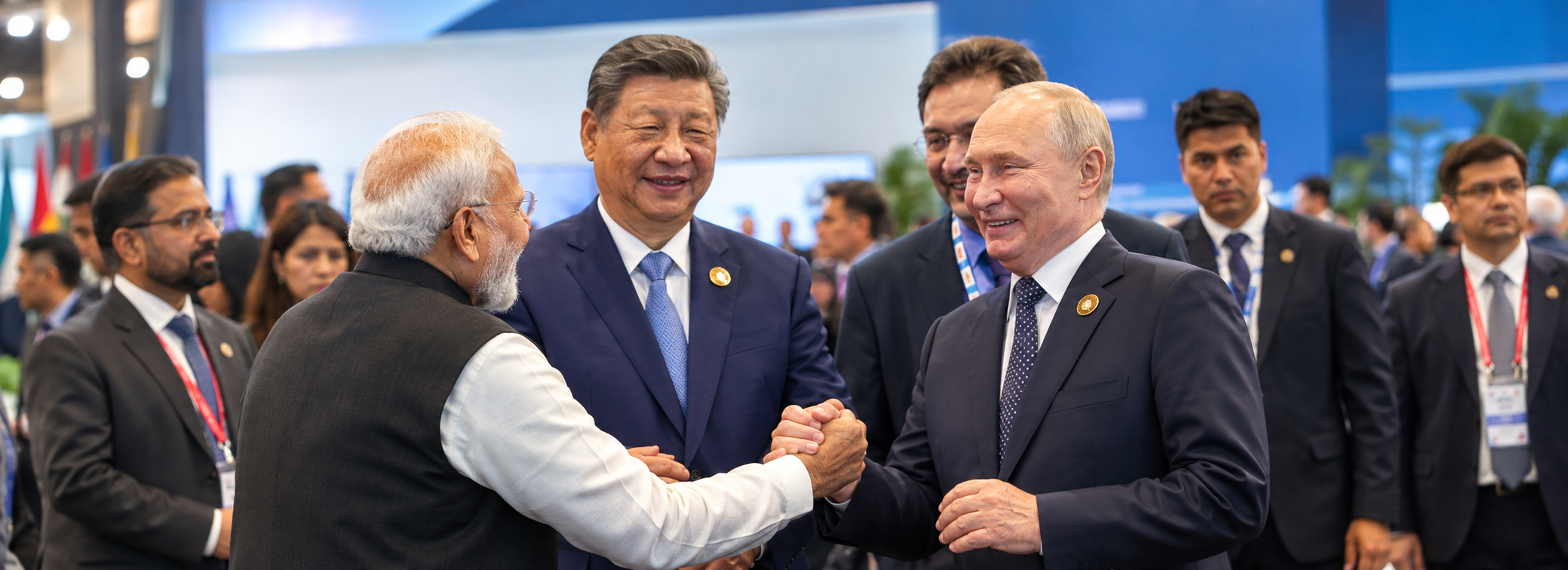
Leaders of the BRICS nations gathered in New Delhi on Saturday for the bloc's 18th annual summit, with Indian Prime Minister Narendra Modi hosting Russian President Vladimir Putin, Chinese President Xi Jinping, Iranian President Masoud Pezeshkian and counterparts from the group's other member states.
A Bloc Under Strain
The summit, held at New Delhi's Bharat Mandapam venue, comes as wars in Ukraine and the Middle East, along with rising tensions between the US and China, test the ability of BRICS members to find common ground despite often-competing geopolitical interests. Thousands of police and paramilitary personnel were deployed around the venue and across the capital, with traffic restrictions in place throughout the weekend.
A Growing Coalition
Founded in 2006 by Brazil, Russia, India and China, with South Africa joining in 2010, BRICS has expanded to 11 full members after adding Iran, the UAE, Saudi Arabia, Egypt and Ethiopia in 2024 and Indonesia in 2025, giving the bloc a footprint covering roughly half the world's population and a substantial share of global economic output. India assumed the group's rotating chairmanship on January 1 under the theme "Building for Resilience, Innovation, Cooperation and Sustainability."
What's On The Agenda
Leaders are expected to focus discussions on economic cooperation, energy, food security, technology, supply chains and reforms to global institutions, with cross-border payments and reduced reliance on the US dollar in trade expected to be a particular focus given India's advocacy for expanded use of national currencies. Pezeshkian's attendance carries added significance given the ongoing US-Iran conflict, while Xi's presence comes ahead of a planned meeting with President Trump in the US later this month.
Looking Beyond New Delhi
The two-day summit runs through Sunday, and analysts say its outcomes will offer a signal of how much practical unity the expanded bloc can achieve at a moment when member states hold sharply different positions on the wars and trade disputes reshaping the global order. For India, hosting the summit for the fourth time since 2012 underscores its bid to position itself as a bridge between the developing world and major global powers.