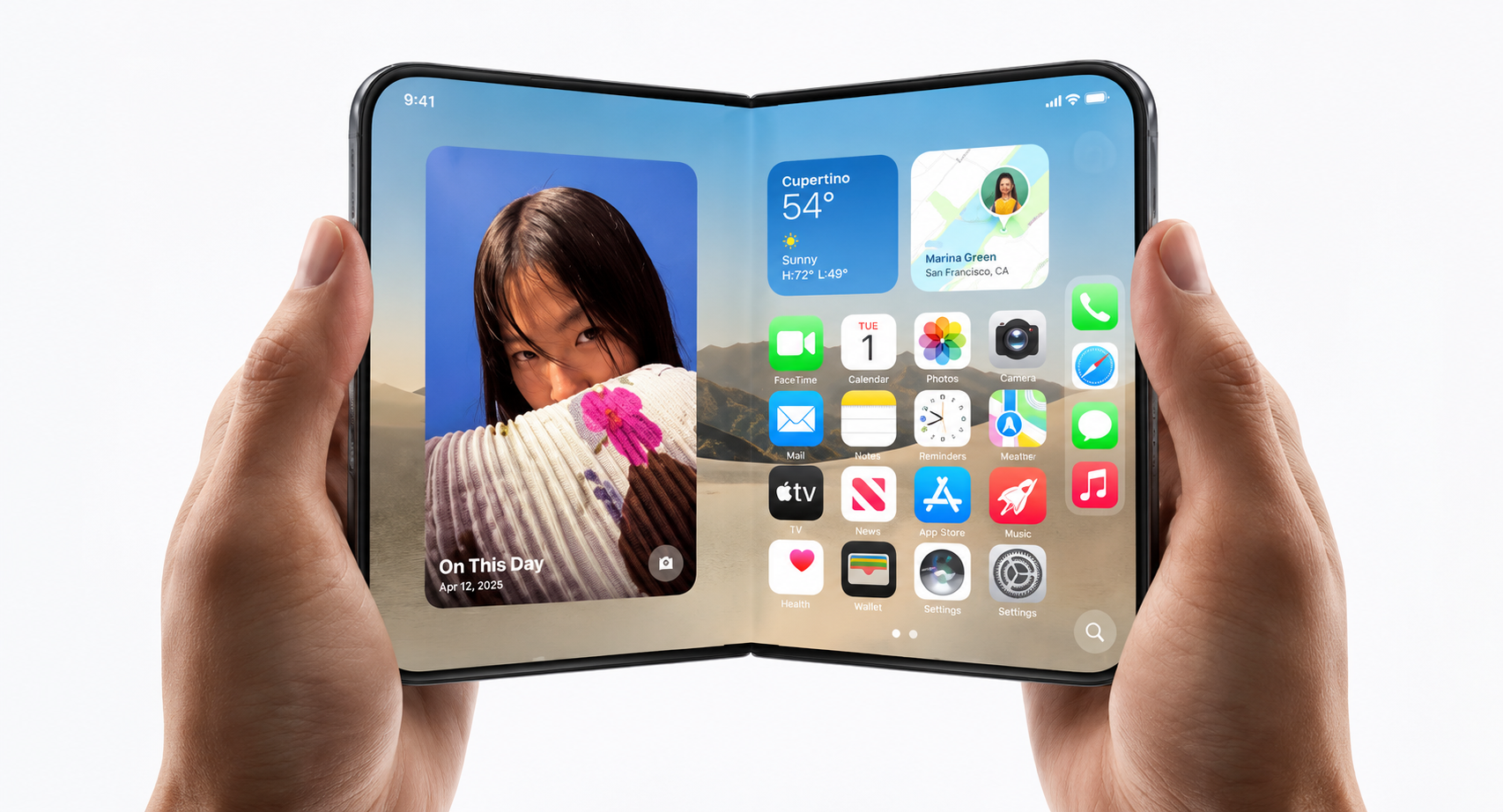
Apple unveiled its first-ever foldable iPhone on Wednesday at its "Surprise and Shine" event in Cupertino, marking both the most significant redesign of the iPhone in nearly two decades and the debut keynote of new CEO John Ternus.
A New Era At Apple
Ternus, who took over from Tim Cook earlier this month after Cook's 15-year run as chief executive, closed out the event with a nod to Steve Jobs's famous keynote line, saying "but actually, there is one more thing" before revealing the foldable device. The two executives shared a lighthearted moment during the presentation, with Cook appearing in a video handing off keynote duties to Ternus, a longtime Apple hardware engineering veteran who has led the company's product design teams since 2001.
Meet The iPhone Duo
The iPhone Duo folds like a passport to reveal a continuous 7.6-inch display, making it the largest screen ever on an iPhone while still fitting in a pocket when closed, according to Ternus, who said the device offers "a larger display that feels as natural and intuitive as iPad." Pricing starts at $1,999 and can reach $3,199 for the top configuration, making it both the most expensive and thinnest iPhone Apple has ever released, with a leasing option offered for buyers who don't want to pay the full cost upfront.
More Than Just The Fold
Alongside the Duo, Apple introduced the iPhone 18 Pro and Pro Max, AirPods 5, Apple Watch Series 12 and Apple Watch Ultra 4, with Ternus emphasizing the iPhone's built-in privacy protections as a selling point for AI features, including updates to Siri. Pricing on the standard lineup also rose by about $100 compared to last year, which Apple has attributed partly to a global memory chip shortage affecting the wider industry.
A Mixed Market Reaction
Despite the historic product reveal, Apple shares slipped 1.9% in afternoon trading as investors had largely anticipated the foldable announcement, with analysts noting that foldables still represent a small share of the overall smartphone market. Industry watchers said Apple's approach, entering the category only after competitors like Samsung worked out early design issues, reflects a familiar playbook, and the real test will be whether the company can expand foldables into a mainstream segment rather than a niche one.